Priority Area: Ensuring animal health and welfare
-
Beyond summer heat: unraveling how prenatal heat stress affects performance across generations
This project examines how heat stress during pregnancy can affect not only a dairy cow’s calf, but also future generations of that calf’s descendants. Building on a unique, multi-year research…

-
Large-scale detection of calf morbidity: integrating drones and computer vision for health monitoring in rearing facilities
This project is developing a new way to monitor the health of young dairy calves using drones, artificial intelligence, and computer vision. Researchers will use drones equipped with standard and…

-
Advancing dairy nutrition and sustainability with artificial rumen technology
Researchers in UW–Madison’s Department of Animal and Dairy Sciences identified a critical gap in research infrastructure: the lack of an advanced rumen simulation system capable of replicating the digestive environment…

-
advanced feeding technology to improve dairy cow efficiency and sustainability
Researchers at the Marshfield Agricultural Research Station (MARS) need more detailed information about how individual dairy cows eat, not just how much they consume. The current feeding system measures feed…

-
Improving udder hygiene and reducing mastitis through adoption of an automated teat preparation system at Mann Valley Farm
This project introduces innovative automation to dairy operations at the Mann Valley Farm by implementing an advanced teat preparation system that standardizes udder hygiene before milking. The system automates washing,…

-
Enhancing safety, animal welfare, and research capacity with upgraded headlocks and automated livestock curtains at Mann Valley Farm
This project strengthens the capabilities of the Mann Valley Farm dairy facility at UW–River Falls by introducing improved animal handling systems and automated environmental controls. Enhanced headlocks support safer, more…
-
Molecular epidemiology of pathogens isolated from subclinical mastitis cases in Wisconsin dairy cows
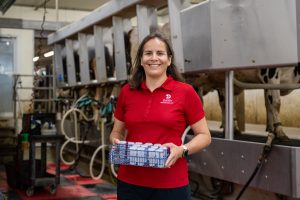
This research focuses on subclinical mastitis, a common but often unnoticed infection in dairy cows that can quietly reduce milk quality and production. Even though infected cows may look healthy,…
-
Farm GPT (herd pilot): custom LLM advisor for dairy cow health monitoring with precision data for bovine management
Dairy farming in Wisconsin and across the United States is becoming increasingly complex. Farmers must balance animal health, milk production, feed efficiency, labor management, and environmental conditions—all while operating within…

-
Captive bolt placement effects on tissue depth and thalamic damage in dairy cattle cadavers
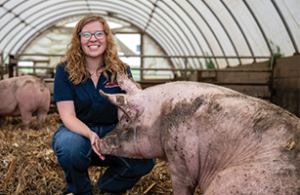
This project aims to improve the effectiveness of penetrating captive bolt (PCB) stunning and euthanasia in cattle by refining placement recommendations based on anatomical evidence. Specifically, it focuses on three…
-
Understanding and reducing pregnancy loss in lactating dairy cows
Early pregnancy loss is one of the biggest reproductive challenges in dairy farming, with about one‑third of pregnancies failing in the first month. These losses stem from either embryo death…