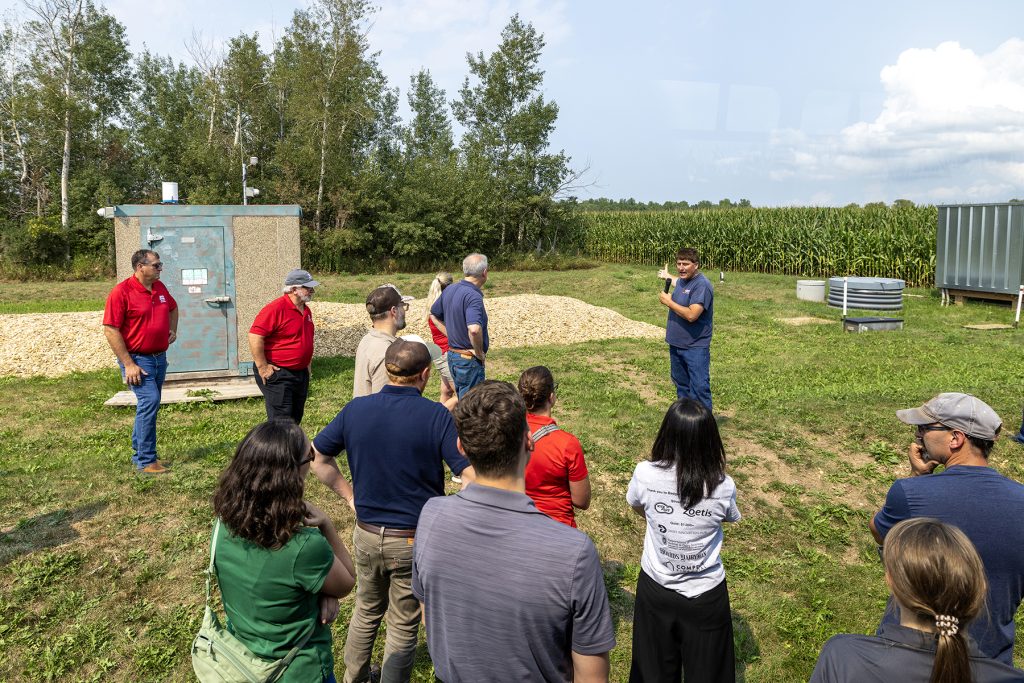
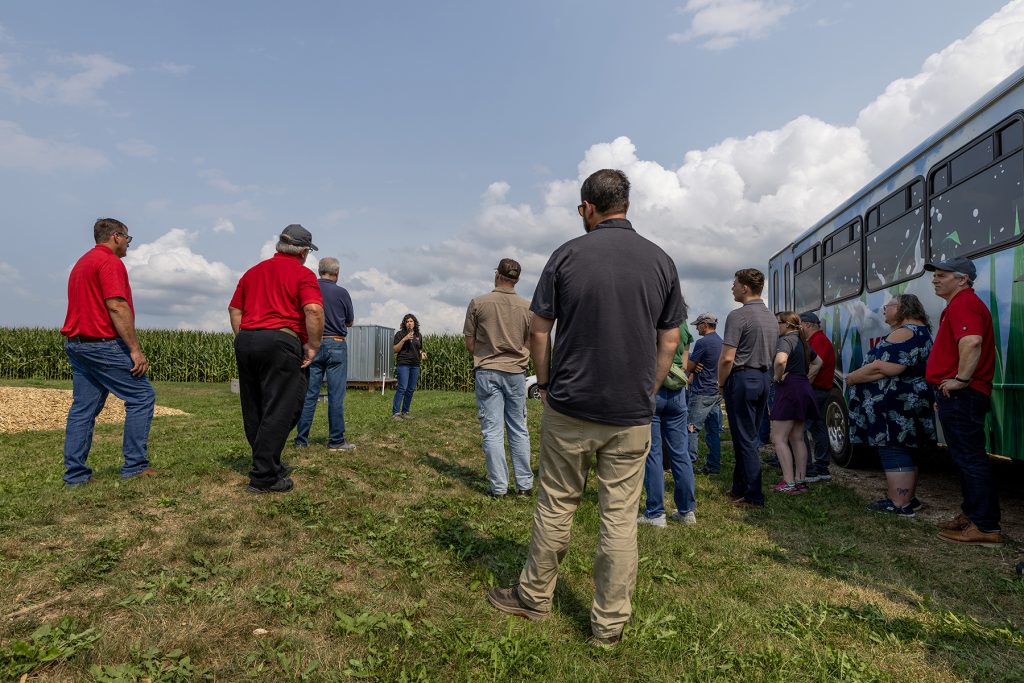
Tour guests explore a woodchip bioreactor at Kinnard Farms on Aug. 11, 2026. Photo by Nguyen Tran
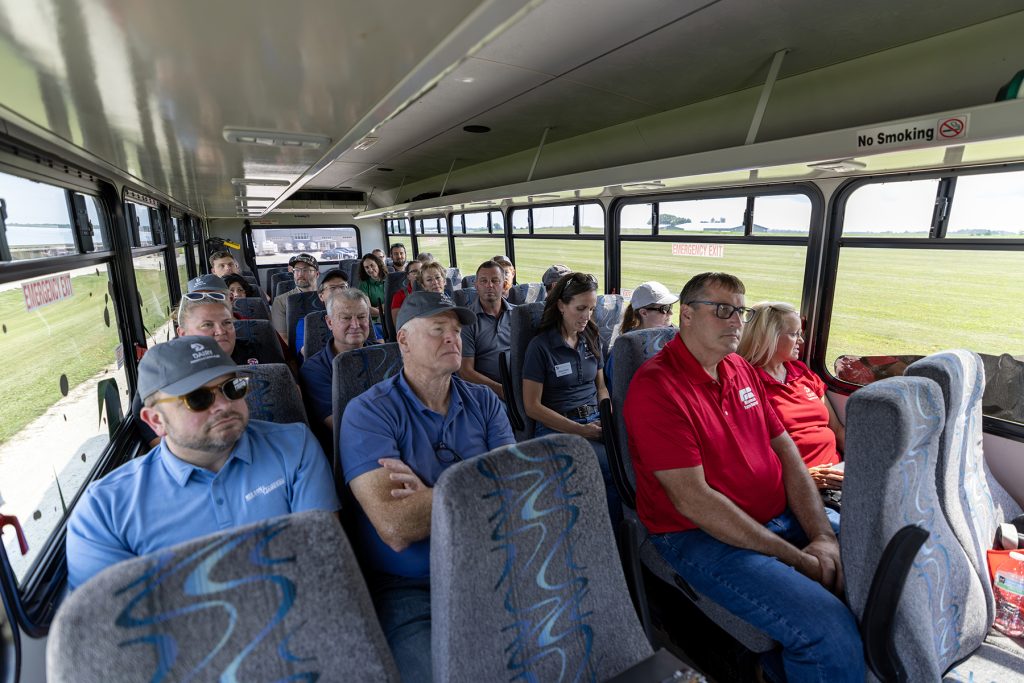
CASCO, Wis. — Members of the Dairy Innovation Hub Advisory Council gathered Aug. 11 at Kinnard Farms in Casco to explore how research, technology and farmer-led innovation intersect.
The event brought together faculty from UW–Madison, UW–Platteville, and UW–River Falls, along with campus leaders, industry partners, farmers and policymakers. Following the council meeting, attendees toured Kinnard Farms to learn about emerging technologies, conservation efforts, and on-farm research partnerships that are creating opportunities for shared learning across Wisconsin’s dairy community.
Founded in 1948 with 80 acres, 14 cows, and seven heifers, Kinnard Farms has grown to 9,000 milking cows and is widely recognized for its commitment to innovation and environmental stewardship.
Advancing manure management technology
Tour participants learned about the farm’s Sedron Technologies Varcor system, which uses separation, drying, and nutrient recovery technologies to transform manure into concentrated fertilizer products, dry solids, and recovered water. Kinnard Farms is the first dairy farm in Wisconsin and only the third in the nation to install the technology.
Farm owner, Lee Kinnard explained that the investment reflects a long-term goal of eventually moving away from liquid manure application altogether. For farms in northeastern Wisconsin’s karst landscape, where shallow soils over fractured bedrock can complicate manure management, technologies that concentrate nutrients and reduce land application offer another tool for consideration.
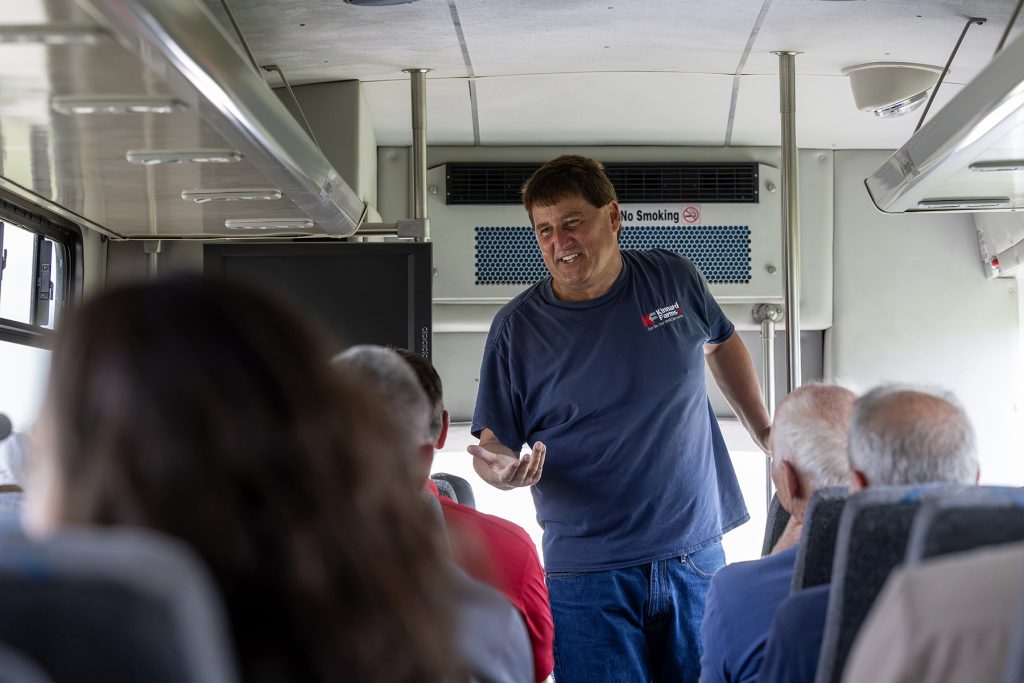
Exploring the Varcor system provided an opportunity to learn from one farm’s experience while generating discussion among researchers, farmers, and policymakers about future opportunities to study the technology’s economic and environmental impacts.
Farmer-led conservation and research partnerships
The tour also highlighted farmer-led watershed groups and on-farm research efforts. Presentations from Laura Paletta and Abby Augarten, both from UW-Madison’s Division of Extension, highlighted how collaborative university research conducted on working farms is helping address challenges facing Wisconsin agriculture.
Paletta, a regional outreach specialist with Extension’s Agriculture Water Quality Program, provided an overview of Kinnard Farm’s woodchip bioreactor and the role it plays in reducing nutrient losses from agricultural fields. A woodchip bioreactor is a buried trench filled with woodchips that removes nitrates from tile drainage water.
Paletta also discussed Wisconsin’s Discovery Farms Program, which works directly with farmers to collect on-farm environmental data and evaluate conservation practices under real-world conditions. While Kinnard Farms is not a Discovery Farms site, the farm has been an active partner in regional initiatives including the Door-Kewaunee Demonstration Farms Network and Peninsula Pride Farms.
Building on those examples, Augarten, Extension’s on-farm research program manager, highlighted a Dairy Innovation Hub-funded project focused on advancing conservation through farmer-led research. Working with eight dairy farmers, watershed groups, agricultural advisers, and Extension educators, the project places farmers at the center of the research process, helping identify challenges, develop research questions, and evaluate solutions through on-farm trials.
Current research focuses on nutrient use efficiency, manure management, forage production, and cover cropping systems, with findings shared through field events, university programming, and farmer-to-farmer learning opportunities.
Together, the presentations demonstrated how Kinnard Farms serves as one example within a broader network of Wisconsin farms partnering with researchers, Extension educators, and conservation organizations to test new ideas and evaluate conservation practices.
“The Dairy Innovation Hub supports research focused on issues that matter to Wisconsin dairy farmers,” said Maria Woldt, director of the Dairy Innovation Hub. “Research happens on our campuses and on private farms. Those partnerships help researchers and students test ideas in real-world settings while creating valuable learning opportunities for the next generation of dairy professionals.”
Closing the day with ice cream, conversation, and a view from the parlor
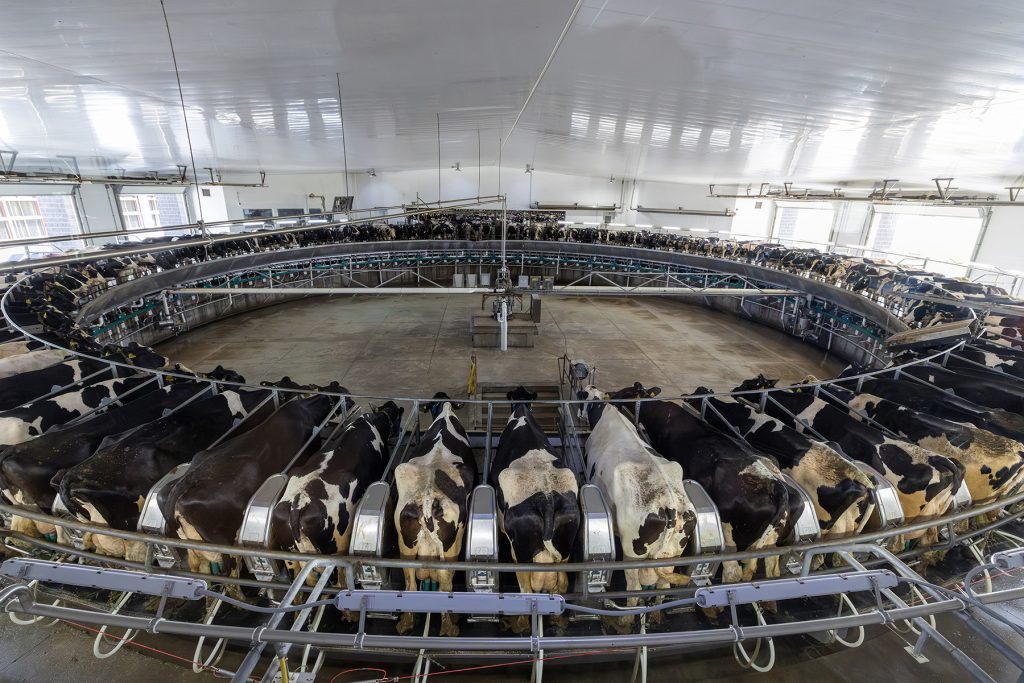
The day concluded in the Kinnard Farms observation room, where participants enjoyed ice cream sandwiches while overlooking the farm’s rotary milking parlor. As cows steadily moved through the carousel-style system below, guests remarked on how calm and relaxed they appeared as they rode the “merry-go-round” through the milking process.
Dairy Innovation Hub Advisory Council Chair Dave Daniels, a dairy farmer from Union Grove, Wisconsin, said bringing university leaders and researchers onto farms remains one of the most valuable aspects of the annual tour.
“Getting researchers out on farms and talking with farmers is how ideas get started,” Daniels said. “Researchers get to see challenges and innovations firsthand, ask questions, and make connections that can lead to future research.”
Supported by a $7.8 million annual state investment, the Dairy Innovation Hub drives dairy research and development across UW–Madison, UW–Platteville, and UW–River Falls. In its first seven years, the Hub has funded nearly 300 research and outreach projects focused on land and water stewardship, human health and nutrition, animal health and welfare, and growing farm businesses and communities.
The next opportunity to engage with the Hub will be the annual Dairy Summit on Nov. 17 at UW-Platteville. This event is free and formatted for a public audience. Registration is open.