
Measuring methane emissions in young bulls: the fast track to more sustainable dairy farming?
Reducing methane emissions from dairy cattle is essential for building a more sustainable future for the U.S. dairy industry. While most research has focused on lactating cows, young animals—especially growing bulls—have received far less attention, despite their potential to help accelerate progress. This project aims to determine whether measuring methane production in young bulls can serve as an effective shortcut to lowering the environmental impact of dairy farming. By collecting methane and related data from elite bulls at two of the world’s leading bull‑stud companies, Genus ABS and URUS PEAK, the research team will examine how much methane emissions vary among young bulls and how much of that variation is influenced by genetics.
The project will also compare methane measurements from young bulls with existing data from lactating cows. If the two are strongly connected, it means methane data collected at bull studs could be used to speed up genetic selection for lower‑emitting dairy cattle—helping farmers reduce emissions without sacrificing productivity. This work supports key Task Force 2.0 recommendations by strengthening collaboration between UW–Madison and private industry and by advancing environmental stewardship efforts tied to the National Dairy FARM Program. Ultimately, the project has the potential to deliver practical, science‑based solutions that improve the economic, environmental, and social sustainability of the U.S. dairy sector.
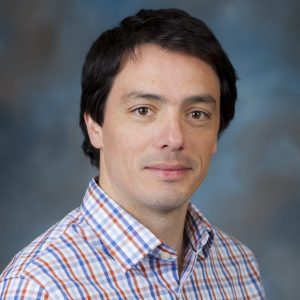
PI: Francisco Peñagaricano
Francisco Peñagaricano is an associate professor and the Judge John J. Crown Chair in Dairy Genetics in the Department of Animal and Dairy Sciences at the University of Wisconsin–Madison. Originally from Uruguay, he earned his B.S. in biology and biochemistry (2005) and his M.S. in animal science (2010) from Universidad de la República before completing both an M.S. in statistics (2014) and a Ph.D. in animal science (2014) at UW–Madison. His research program focuses on quantitative genomics and computational biology, using large datasets, advanced statistical tools, and state‑of‑the‑art genomic technologies to better understand the genetic architecture of important livestock traits. His work spans gene mapping, genomic prediction, multi‑omics data integration, and identifying genetic factors that influence traits such as fertility, feed efficiency, resilience, and methane emissions.
Peñagaricano’s research has broad implications for improving dairy farming efficiency and sustainability, helping breeders and farmers make more informed decisions that benefit both animal performance and environmental outcomes. Before joining the UW–Madison faculty, he served as a faculty member at the University of Florida from 2015 to 2020, strengthening his expertise in animal genetics and applied research. His laboratory continues to publish influential studies on topics ranging from cow resilience to climate‑related stressors, contributing critical knowledge to the dairy industry’s future. His commitment to innovative, data‑driven solutions has made him a leader in modern dairy genetics and a valued mentor to students and collaborators across the field.
fpenagarican@wisc.edu