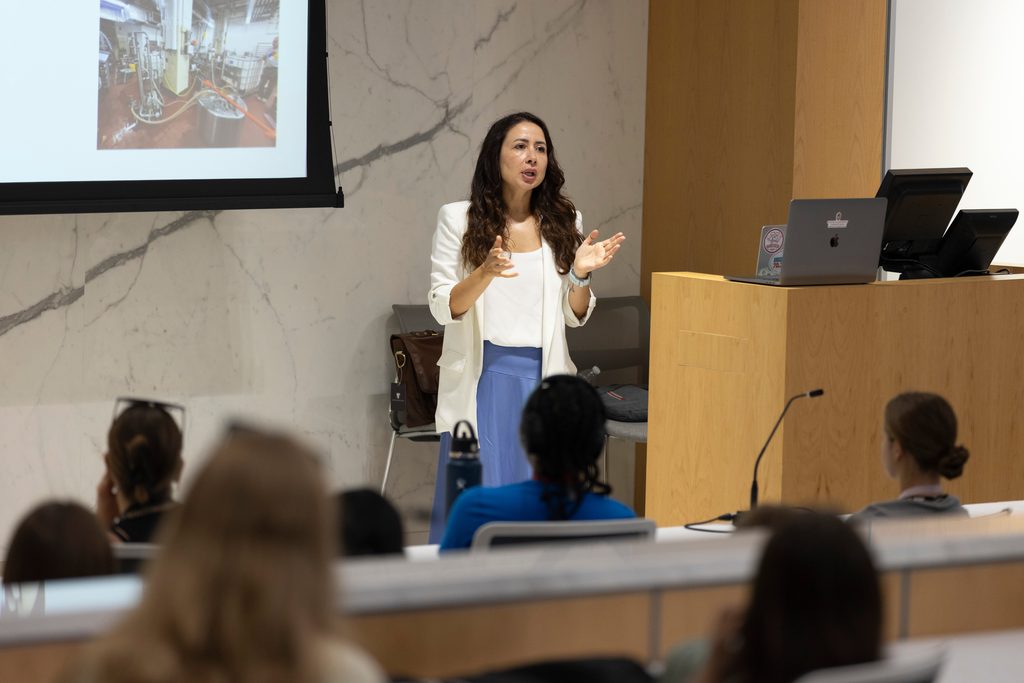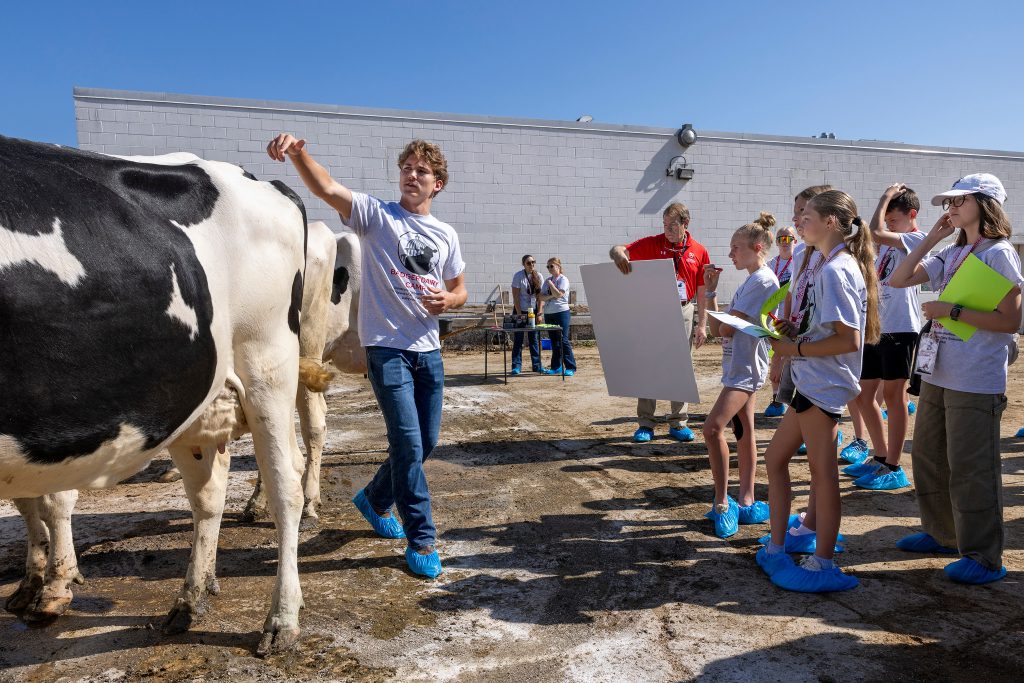
Campers listen to camp counselor Nick Needham lead a dairy judging and linear evaluations activity. Photos by Michael P. King/UW–Madison CALS
A revived summer tradition is helping inspire Wisconsin’s next generation of dairy leaders. Through hands-on experiences, campus exploration, and mentorship from industry professionals, Badger Dairy Camp introduced students to the many careers, opportunities, and innovations that power the state’s dairy sector.
In mid-July, 63 high school and middle school students attended the four-day Badger Dairy Camp on the University of Wisconsin–Madison campus, where they learned about the breadth of areas that contribute to Wisconsin’s dairy industry, and the higher education and career opportunities available to them. The programming, for youth ages 12-17, included hands-on workshops and visits to multiple campus labs, the UW School of Veterinary Medicine and a nearby dairy farm – plus college prep sessions and recreational activities.
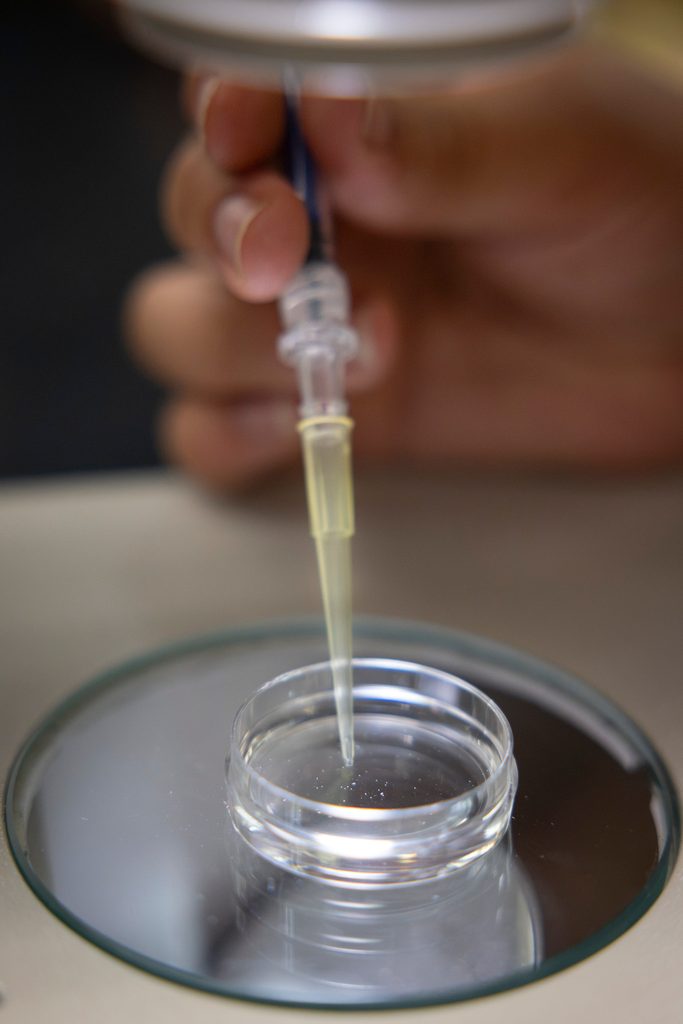
“One of my favorite sessions was learning about the reproductive tract. That was pretty cool,” says Grace Elmhorst, a high school freshman from Granton, Wisconsin whose family runs Romadka View Holsteins. “We got to see the reproductive organs, and one of the cows was pregnant with twins, so we got to see that.”
This year’s Badger Dairy Camp is a revival – and expansion – of a popular summer program that was last offered 2018. The Covid pandemic waylaid earlier
efforts to bring back the camp. Funding to re-launch the camp came from a UW Dairy Innovation Hub grant, as well as contributions from Compeer Financial, Hoard’s Dairyman, UW–Madison Department of Animal and Dairy Sciences (ADS) and other sponsors.
“We were thrilled to bring back Badger Dairy Camp and see such a positive response. The feedback we heard at check-out was overwhelmingly positive, with students sharing how much they enjoyed the hands-on experiences, new friendships, and career exploration opportunities,” says event co-organizer Eric Ronk, a member of ADS’ teaching faculty. “It truly took a village to make this camp a success, and we are grateful to everyone who contributed their time, talents and other support to create such a meaningful experience for these students.”
The camp is unique from other dairy youth camps because the programming covers the Hub’s four key priority areas: stewarding land and water resources; enriching human health and nutrition; ensuring animal health and welfare; and growing farm business and communities. Campers also participated in more traditional dairy youth activities such as dairy judging and linear evaluation.
“I’ve done linear evaluation before as part of a 4H judging team, but it’s cool to get to learn from the UW’s dairy judging coaches and members of the team,” says Evan Brey, a rising freshman at Southern Door High School whose family runs Brey Cycle Farm in Sturgeon Bay. “They’re obviously a lot more experienced at contests, and the Wisconsin judging team is pretty prestigious – so it’s exciting to learn from them.”
Campers had the full student experience, staying and dining in a campus residence hall. There were opportunities to interact with peers, current UW students and faculty during recreational activities including volleyball, bowling and a bonfire at campus’ scenic Picnic Point. The majority of attendees were members of farm families, but the programming was designed for all interested learners.
“We need to recruit students from both agricultural and nonagricultural backgrounds to sustain the dairy workforce and local communities in Wisconsin,” says co-organizer Laura Hernandez, professor of animal and dairy sciences. “That’s the long-term goal of this program – to inspire, prepare, and support young people as future leaders in Wisconsin’s dairy sector.”
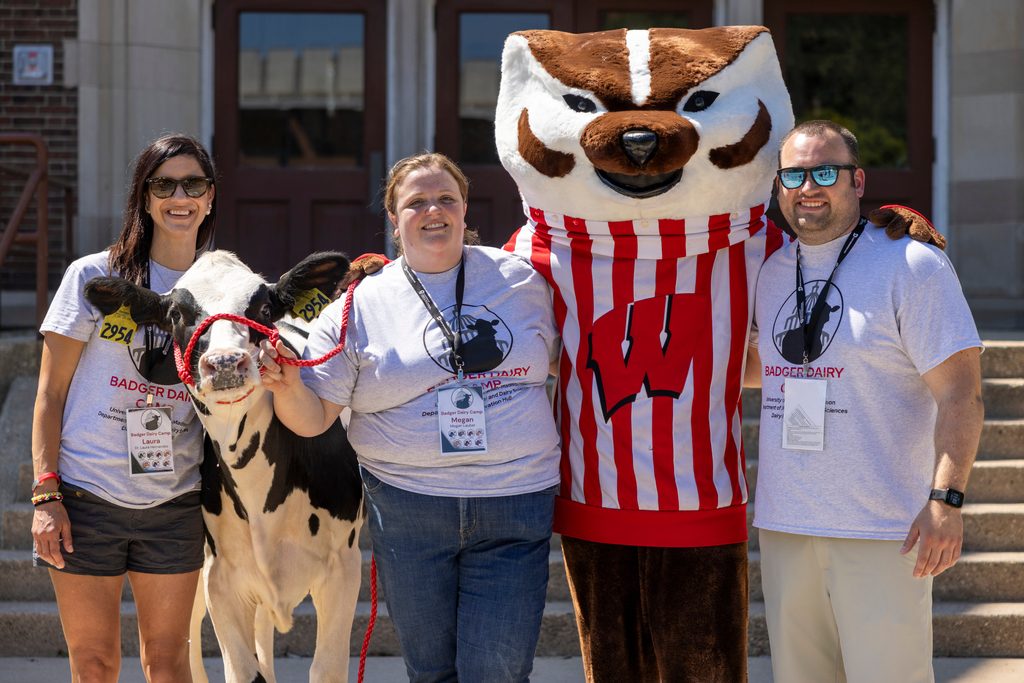
“The engagement among camp participants, undergraduate and graduate students, faculty, staff, alumni, and industry professionals was phenomenal,” says ADS graduate student Megan Lauber, who led planning and coordination for the camp. “It showcased how strong the dairy community is here in Wisconsin.”
Short-term, high-impact grant gives the program a needed boost
The revival of Badger Dairy Camp was supported through a Dairy Innovation Hub short-term, high-impact grant focused on strengthening Wisconsin’s future dairy workforce. The project, titled “Re-establishing dairy youth programming in America’s Dairyland to ensure the sustainability of Wisconsin’s dairy workforce”, was designed to inspire, prepare, and support young people interested in careers connected to dairy and agriculture.
The Hub’s short-term, high-impact grants at UW–Madison support one-year projects that deliver meaningful results for Wisconsin’s dairy community on an accelerated timeline. These grants help faculty, staff, and partners develop innovative programs, tools, and educational opportunities that can quickly benefit farmers, students, and industry stakeholders while addressing key challenges facing the dairy sector.
Wisconsin’s dairy community depends on a steady pipeline of talented professionals, from animal scientists and veterinarians to food scientists, business managers, and agricultural educators. The grant supports several outreach efforts aimed at increasing awareness of the many educational and career opportunities available in dairy. In addition to relaunching Badger Dairy Camp, the overall project vision includes regional outreach events and hands-on educational experiences that help young people explore dairy-related careers and build practical skills.
The project is led by Laura Hernandez, professor of animal and dairy sciences at UW–Madison. Hernandez is an internationally recognized researcher whose work focuses on lactation biology, dairy cattle health, and the biological processes that support milk production. Along with her research and teaching responsibilities, she is actively involved in outreach efforts that connect university research with farmers, students, and the public.
The grant team also includes Eric Ronk, a teaching faculty member in the Department of Animal and Dairy Sciences whose work emphasizes student learning, advising and dairy industry engagement. A Wisconsin native who grew up on his family’s Century Farm, Ronk brings strong practical experience to his teaching in animal sciences and dairy herd management and serves as a mentor to students pursuing careers in the dairy industry.
PhD candidate Megan Lauber played a key role in planning and coordinating the camp. Her research focuses on dairy cattle reproduction and herd management, and she is passionate about youth development and agricultural education. Before pursuing her graduate studies, Lauber gained extensive hands on experience on her family’s farm in Union Grove, Wisconsin, where she managed calf and heifer programs and worked with registered Holsteins. Having been a camper at Badger Dairy Camp, Lauber knew first-hand how influential this experience was to youth interested in dairy. Most recently, Lauber joined Utah State University’s Department of Animal, Dairy, and Veterinary Sciences.
Together, the project team is working to create meaningful opportunities that help the next generation discover the many ways they can contribute to Wisconsin’s dairy community.