
The University of Wisconsin–Madison College of Agricultural and Life Sciences (CALS) recently awarded six two‑year graduate student assistantships through the Dairy Innovation Hub, expanding the university’s capacity to address emerging challenges and opportunities in the dairy sector. These students are leading research projects in the Hub’s four priority areas: stewarding land and water resources; enriching human health and nutrition; ensuring animal health and welfare; and growing farm businesses and communities.
A graduate student assistantship is a paid position for students pursuing an advanced degree. Students work closely with faculty mentors while receiving tuition remission, health insurance, and a monthly stipend. Assistantships allow students to gain hands‑on experience that supports their career goals while developing broadly transferable skills in communication, critical thinking, and leadership.
Supported by a $7.8 million annual investment from the state of Wisconsin, the Dairy Innovation Hub positions Wisconsin’s dairy community for long‑term success by advancing research, training future talent, and fostering collaboration across UW–Madison, UW–Platteville, and UW–River Falls. Since launching in 2019, the Hub has supported more than 270 projects across the three campuses.
The following UW–Madison graduate students have been selected for funding:
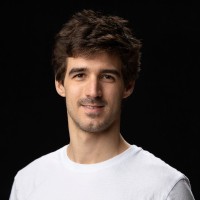
“Genomic solutions to reduce fetal loss in dairy cattle”
Agustín Chasco, Department of Animal and Dairy Sciences
Chasco is a PhD student with a background in agricultural engineering, quantitative genetics, and large‑scale data analytics. His previous research includes developing and validating fertility‑related traits for dairy cattle and working with reproductive sensor data. He has also held research and development roles at Bayer Crop Science and completed internships with the Council on Dairy Cattle Breeding and ABS Global.
Working with faculty mentor Francisco Peñagaricano and collaborator Kent Weigel, Chasco is studying the genetic causes of fetal loss—pregnancy loss after 42 days of gestation—which has substantial economic and animal‑welfare impacts. Using reproductive and genomic records from more than two million dairy cows, the team will identify genetic variants and biological pathways associated with fetal loss. The project will also generate new genomic tools to help farmers incorporate this trait into breeding and management decisions, ultimately supporting more sustainable and productive dairy herds.

“The antimicrobial dilemma: exploring the effects of preventative antimicrobials on microbial colonization and immune development in dairy calves”
Trinidad Fernández Wallace, Department of Animal and Dairy Sciences
Fernández Wallace is a PhD student specializing in bovine immunology. Her research focuses on how the immune system of dairy cows changes around calving. Originally from Argentina, she earned top academic honors at the National University of Córdoba and gained experience in animal nutrition, research, and teaching.
She works with Assistant Professor Lautaro Rostoll‑Cangiano on a project addressing a key challenge in calf health: reducing the need for preventative antimicrobials. Early‑life antibiotic use can disrupt gut development and microbial diversity, potentially affecting long‑term health. This project examines how antimicrobial use during the pre‑weaning period affects immunity and gut microbes and evaluates whether extended colostrum supplementation can serve as a natural alternative. The goal is to support healthier calves, reduce antimicrobial dependence, and give dairy producers practical tools to improve calf care.
“Sustainable intensification of corn silage-livestock systems under tile drainage”
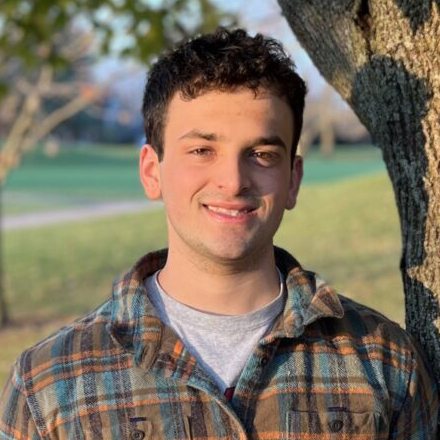
Daniel Maraldo, Department of Geography
Maraldo is a PhD student in geography whose research focuses on earth systems, climate impacts, and geospatial analysis. He brings significant field experience—from Arctic expeditions to soil and wetland surveys—and advanced technical skills in drone‑based mapping, hydrologic monitoring, and environmental data processing. He completed his bachelor’s degree at Texas A&M University with honors.
As part of a research team led by Assistant Professor Mallika Nocco in UW–Madison’s Department of Biological Systems Engineering, Maraldo is working on a project co‑funded by UW–Platteville, where Assistant Professor Joseph Sanford also serves as a co‑mentor and research collaborator. The team is examining how forage‑quality cover crops and manure‑derived biochar can improve productivity and water quality in tile‑drained corn silage–livestock systems. Working with partners such as Discovery Farms, the researchers are measuring crop performance, soil health, and nutrient losses to identify “win‑win” strategies that enhance farm profitability while reducing runoff to Wisconsin’s lakes and streams. Sanford’s Platteville laboratory supports nutrient analysis and biochar production, giving Maraldo mentorship and hands‑on training across both campuses.
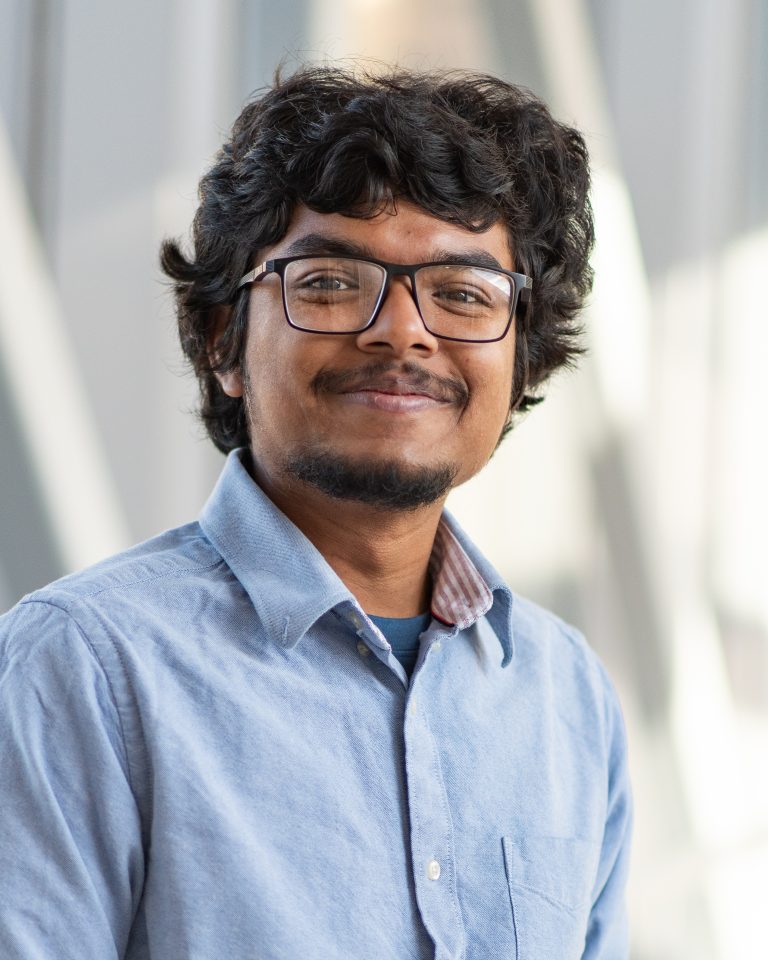
“A collaborative initiative for continuous groundwater nitrate monitoring in western Wisconsin leveraging legacy well data and novel sensing technologies”
Sharar Muhtasim, Department of Electrical and Computer Engineering
Muhtasim is a PhD student specializing in printed electronics, flexible sensors, and electrochemical sensing. His research in UW–Madison’s Laboratory for Printed Electronics and Sensors builds on previous training in nanoscale device engineering at the University of Dhaka in Bangladesh.
His work contributes to a groundwater‑monitoring project co‑funded by UW–River Falls and UW–Madison. The collaborative team includes soil scientist Jingyi Huang, sensor engineer Joseph Andrews, and UW–River Falls water scientist Jill Coleman Wasik, who has led well‑testing programs in western Wisconsin for more than eight years. The project aims to develop affordable, continuous nitrate‑monitoring systems for residential and farm wells—a major need in areas experiencing water‑quality challenges. By adapting printed nitrate‑sensing technology for groundwater, the team hopes to provide rural communities with real‑time water‑quality information and improve understanding of how weather, land use, and manure management affect nitrate levels.
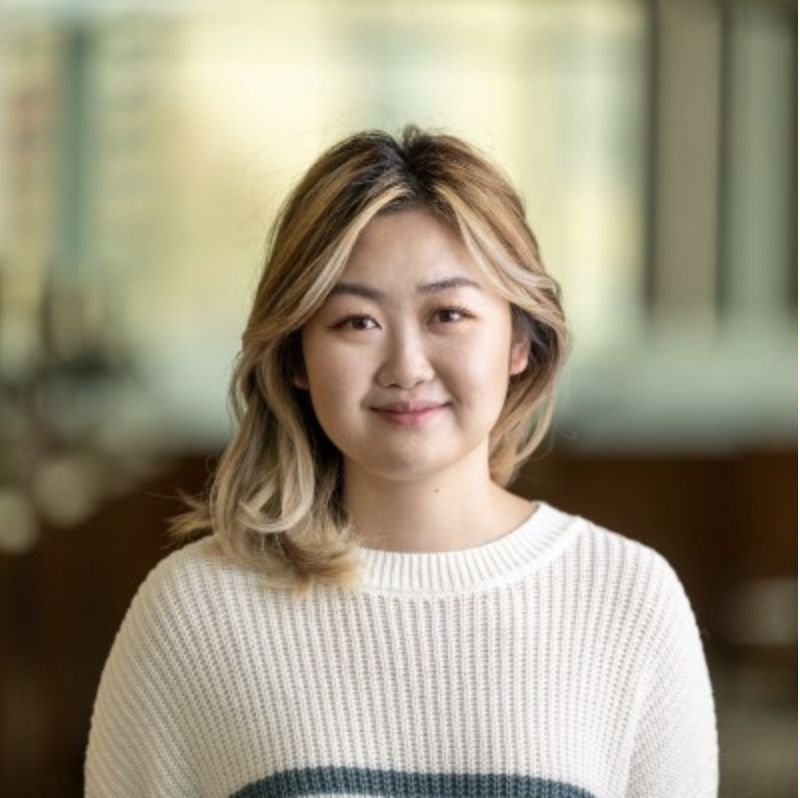
“Fluidized bed drying (FBD) vs. spray drying of liquid whey protein phospholipid concentrate (WPPC): oxidative shelf-life, in-vitro digestion, and therapeutic potential”
Crystal Qing, Department of Nutritional Science
Qing is a PhD student in nutrition and metabolism with extensive experience in biochemistry, immune‑cell metabolism, and mass‑spectrometry‑based analysis. She has contributed to several research teams across campus and brings expertise in science communication and data visualization.
As part of a research team led by Mark Richards in the Department of Animal and Dairy Sciences, Qing is helping compare two drying methods—traditional spray drying and fluidized bed drying (FBD)—to determine which better preserves the quality and stability of whey protein phospholipid concentrate (WPPC). Early results show that FBD may reduce oxidation and improve protein digestibility, suggesting it could add value to this dairy coproduct. The project also assesses whether low‑oxidation WPPC can help protect against liver disease in a preclinical model.
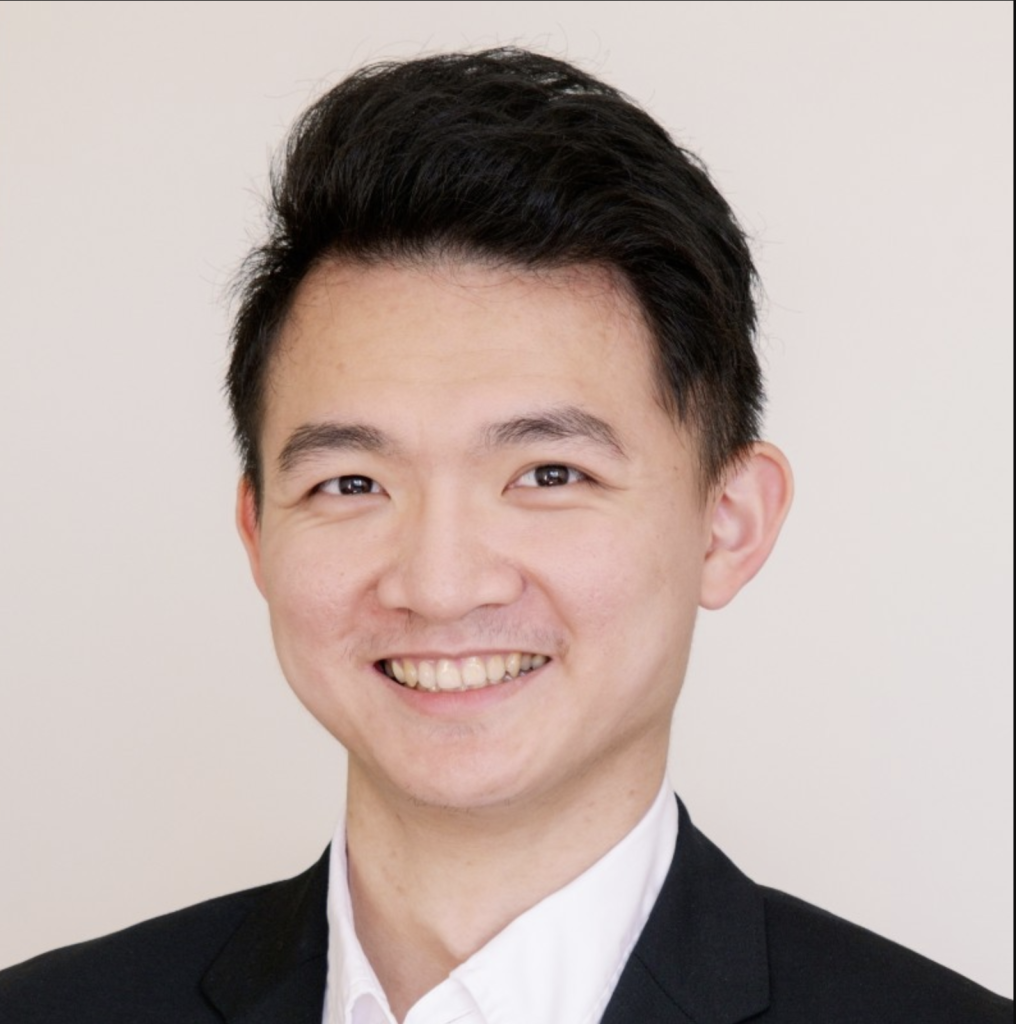
“Assessing the functionality of a promising new dairy ingredient (WPPC) on the health of post‑menopausal women”
Kevin Shih, Department of Food Science
Shih is a PhD student in nutrition and metabolism and a Registered Dietitian Nutritionist with training in both the United States and Taiwan. His background spans clinical care, public health, and laboratory‑based nutrition research. At UW–Madison, he works with faculty mentor Bradley Bolling in the Department of Food Science, specializing in nutrient analysis and human nutrition.
As part of the Bolling lab team, Shih studies whey protein phospholipid concentrate (WPPC), an underused but nutritionally valuable dairy coproduct. WPPC is naturally rich in choline—an essential nutrient important for brain function, cell structure, and fat metabolism—that many Americans, including postmenopausal women, do not consume enough of. His project explores whether WPPC can safely and effectively improve choline status while also monitoring inflammation, gut health, and metabolic markers. Demonstrating the health value of WPPC could create new uses for this dairy stream and increase sustainability across the industry.
Contact: Maria Woldt, Dairy Innovation Hub program manager, (608) 265-4009, maria.woldt@wisc.edu