
Summer tour highlights research and farm partnerships in Southwest Wisconsin
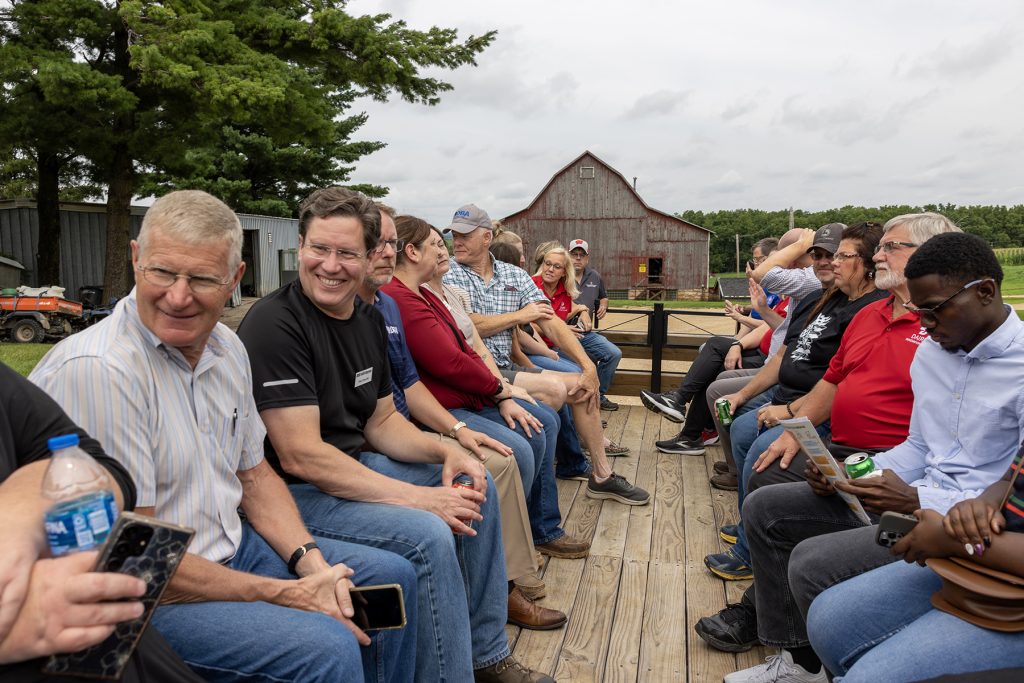
On Aug. 12, members of the Dairy Innovation Hub advisory council gathered at the University of Wisconsin–Madison’s Lancaster Agricultural Research Station (ARS) for a day of collaboration, learning, and on-site tours highlighting dairy-related research and innovation across southwest Wisconsin.
The event brought together university researchers, farmers, legislators, and industry leaders to review ongoing projects, explore future opportunities, and see how Hub investments are driving progress on both research stations and private farms.
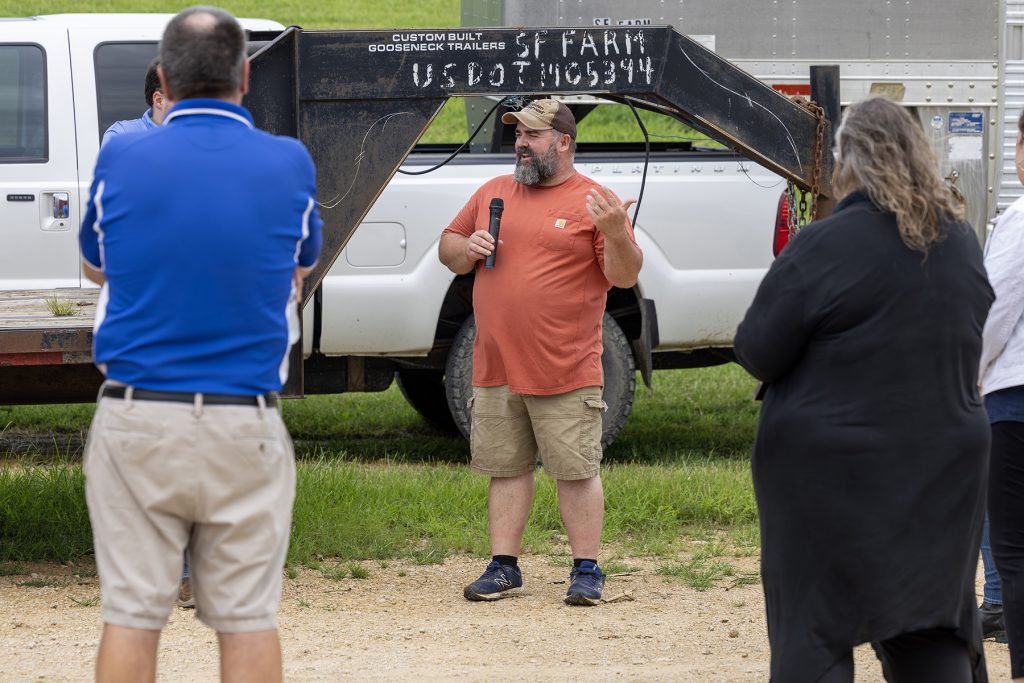
Andy Buttles farms with his family in Lancaster, Wis. He has also hosted several research trials on his farm and employed numerous interns.
The day began with a tour of Lancaster ARS led by station superintendent Arin Crooks, who provided an overview of current research and highlighted areas for future collaboration. Matt Ruark, faculty director of the Hub and professor and soil science extension specialist in the UW–Madison Department of Soil and Environmental Sciences, discussed the importance of soil health in dairy systems.
“Our soils research is designed to provide practical, science-based solutions that farmers across Wisconsin can use,” said Ruark. “By connecting soil health with dairy nutrition and sustainability goals, we’re building a more resilient future for the industry.”
The group then visited Stone-Front Farm, owned by Andy and Lyn Buttles. This stop illustrated the strong partnerships between university researchers and private farms conducting on-farm trials. Presentations from Andy Buttles, UW–Platteville School of Agriculture director Tera Montgomery, and former assistant professor Ryan Pralle showcased how applied research improves relevance and results.
“We participate in university research because the results mean more to us when the work includes real-world farming scenarios, like ours,” said Buttles. “The faculty and students are great to work with.”
The visit also emphasized student training. By working on commercial farms, students gain critical hands-on experience and better understand the real-world challenges facing dairy farmers. Buttles has mentored more than 60 student interns from local high schools, technical colleges, and universities.
Next, the group toured UW–Platteville’s Pioneer Farm, where faculty and staff showcased the impact of Hub investments. Inside the dairy center, Montgomery and Pioneer Farm director Chuck Steiner introduced technologies such as automated milking systems, Ric2Discover feeding gates, and a Greenfeed machine to measure greenhouse gas emissions. These tools improve efficiency, monitor cow health, and reduce waste.
Assistant professor Joseph Sanford and Steiner also presented manure management research, including anaerobic digestion and biochar production. These projects aim to reduce environmental impacts while creating value-added products from dairy waste.
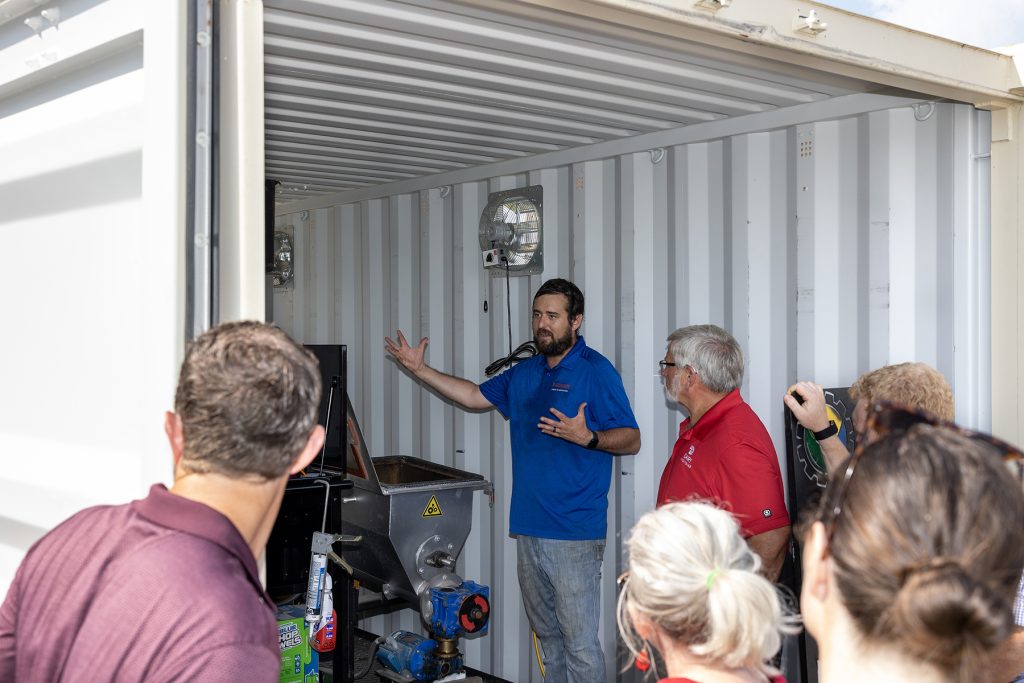
Hub-funded faculty member Joseph Sanford showcases his research on manure digesters and biochar. Members of the advisory council, along with farmers, and local leaders attended the tour.
“Investments like these are a direct result of the Dairy Innovation Hub’s commitment to integrating cutting-edge research into daily farm operations,” said Steiner. “They allow us to test technology in real farm conditions, so farmers can see how it works before making investments themselves.”
The day wrapped up with ice cream from Pioneer Sweets, a student-led business. Participants used the time to ask final questions, share insights, and view additional research posters from Hub-affiliated campuses.
From soil science to student learning, the Aug. 12 tours demonstrated the Dairy Innovation Hub’s strong focus on collaboration and practical impact. As Ruark noted, “The Hub is about bringing people together—farmers, researchers, students—to create solutions that work in the field, in the barn, and in the marketplace.”