
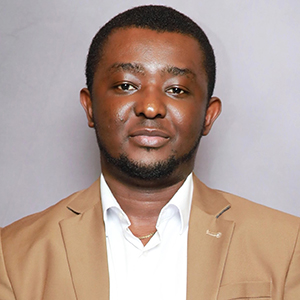
Oluwaseun Odunfa, a second-year PhD student in dairy science, is conducting research focused on improving dairy cow resilience and sustainability in the face of rising global temperatures. In this Q&A, he shares how an unexpected introduction to heat stress research during his master’s program sparked a passion for dairy science and led him to explore the metabolic and physiological factors that influence heat stress resilience and feed efficiency in dairy cows. Oluwaseun reflects on the hands-on fieldwork, collaborative opportunities, and Hub-supported resources that are shaping his goal of pursuing a research-driven career that bridges science, animal welfare, and practical solutions for the dairy industry.
What sparked your interest in dairy-related research?
My journey into dairy research began somewhat unexpectedly. During my master’s program at Kentucky State University, my advisor, Dr. Yun Jiang; who is now also my PhD advisor, asked me to conduct a review of literature on heat stress in dairy cows. At the time, most of my research experience had been with small ruminants, so the world of dairy science was new to me. As I explored the literature, I became fascinated by how even slight changes in temperature can largely influence a cow’s physiology, metabolism, and productivity. That curiosity soon evolved into passion when my master’s thesis centered on heat stress resilience in dairy cows, a collaborative project with Dr. Sha Tao’s team at the University of Georgia. Working on that study opened my eyes to the power of research in addressing real-world challenges faced by the dairy industry. Since then, I have been deeply motivated to continue exploring how metabolic and physiological adaptations can enhance dairy cow resilience and sustainability in a changing climate.
Briefly describe your research project.
As global temperatures continue to rise, dairy cows are increasingly challenged by heat stress; a silent but significant threat that reduces productivity, compromises animal welfare, and strains the sustainability of dairy farming. This growing concern has inspired my research, which focuses on identifying blood biomarkers associated with heat stress resilience in dairy cows. The primary goal is to determine whether specific metabolomic differences in cows prior to heat exposure can indicate their ability to cope with heat stress. I am particularly interested in identifying which blood biomarkers and metabolic pathways can be used to predict and ultimately select cows that are more resilient to heat stress in the future.
Beyond the heat stress–focused objectives, the study also seeks to examine the unique characteristics of the most feed-efficient cows based on their blood metabolome and to compare efficient and inefficient cows in terms of nutrient digestibility, nitrogen partitioning, and blood metabolomic profiles.
The overall goal is to identify reliable metabolic indicators that can help producers select and manage cows that are both heat-resilient and feed-efficient, thereby enhancing dairy productivity, sustainability, and adaptability under increasing environmental challenges
How has the Dairy Innovation Hub supported your research or academic journey?
The Dairy Innovation Hub has been instrumental in advancing my research by providing both financial and academic support. Through the Hub, I have gained access to state-of-the-art facilities, resources, and valuable collaborative opportunities that have made it possible to conduct my research efficiently and without much stress.
What is your favorite part of being involved in research?
My favorite part of research is the fieldwork; working directly with cows. I enjoy observing their behavior, collecting samples, and applying research protocols in real farm environments. Being hands-on with animals not only deepens my understanding of their responses but also reminds me why I am passionate about improving their welfare and productivity through science.
What opportunities have you gained through Hub support?
The Hub has provided not only research funding and assistantship but also mentorship, networking, and professional development opportunities. Through its support, I have had the privilege of collaborating with experienced faculty, which has broadened my scientific perspective and research skills. Additionally, I have had the opportunity to attend and connect with professionals at major scientific gatherings such as the American Dairy Science Association (ADSA) Annual Meeting, Dairy Summit, and the Dairy Symposium. These experiences have enhanced my communication, presentation, and networking skills while also deepening my engagement with both academic and industry leaders in the dairy field.
How has working with the Hub shaped your academic or career goals?
Working with the Dairy Innovation Hub has reinforced my passion for research that integrates animal nutrition, physiology, and sustainability. It has inspired me to pursue a long-term career that combines research and practical application, either as an academic researcher or as a dairy consultant supporting producers in implementing science-based solutions to improve animal resilience and productivity.
What are your plans after graduation, and how does your current research prepare you for that path?
After graduation, I plan to continue contributing to the dairy industry, whether in academia or in an industry-based research role. Through my current research, I am learning how to apply scientific knowledge to address practical challenges in dairy production, particularly those related to heat stress and feed efficiency. I am also developing strong analytical and problem-solving skills, as well as hands-on experience working with cows, which will help me design and implement strategies that improve animal resilience, productivity, and overall farm sustainability.