
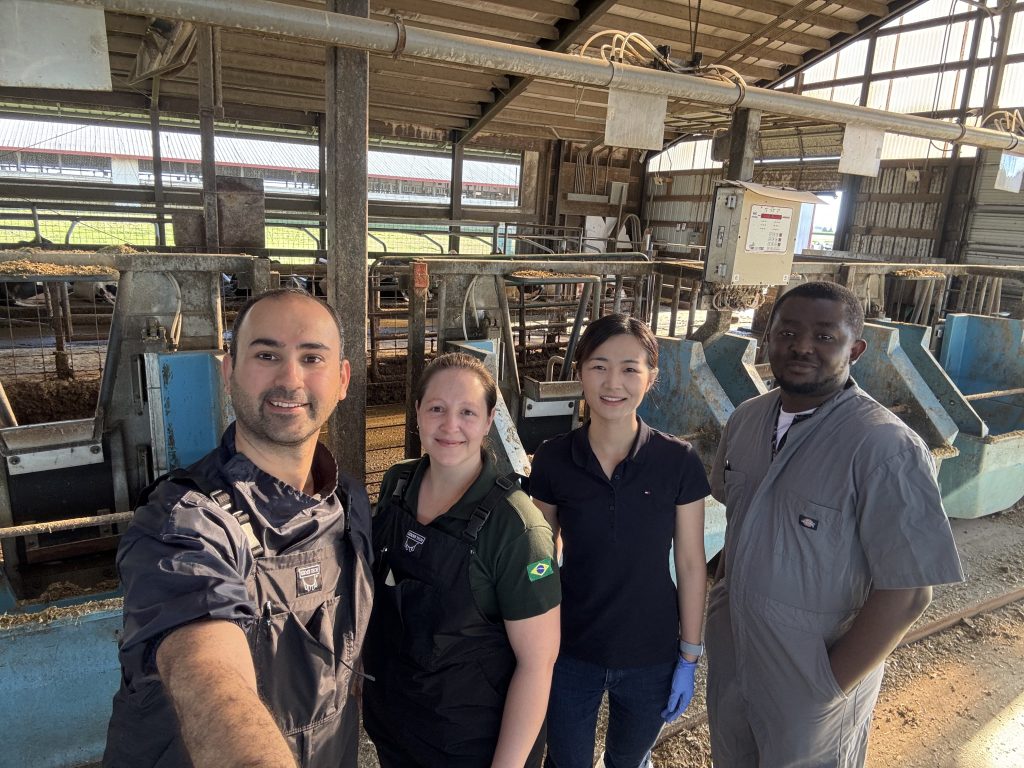
Together with members of her lab, Jiang is building a research program developing nutritional strategies to improve feed efficiency, reduce environmental impacts, and improve feed quality and safety. Photo contributed
Assistant Professor | Animal and Dairy Sciences UW–Madison | start date August 2024
What is your hometown? Where did you grow up?
I was born in a small village near Hefei City, Anhui Province in China. I later moved to Jiangsu Province for middle school.
What is your educational/professional background, including your previous position?
I received my bachelor’s in animal science from Nanjing Agricultural University, followed by a master’s and PhD in animal science from the University of Florida. Prior to joining the UW–Madison in August 2024, I served as an assistant professor of livestock nutrition at Kentucky State University.
What is your field of research, and how did you get into it?
My field of research is dairy nutrition. I developed an interest in dairy nutrition in college when I gained an understanding of how dairy cows can convert human-inedible feed – such as grass and agricultural byproducts like rice straw – into milk. I realized this is crucial for feeding the growing global population with the limited resources available on Earth.
What are the main goals of your current research program?
The main goals of my current research program are to develop nutritional strategies to optimize feed efficiency, reduce environmental impacts such as methane emissions, and improve feed quality and safety in the dairy industry.
What was your first visit to campus like?
My first campus visit was after a huge snowstorm in January 2024. I was fascinated by people ice skating on ponds and lakes — it felt unreal. Growing up in southern China, I had never really seen this in real life. I was also amazed by the facilities and the capacity for dairy research at UW–Madison.
What’s one thing you hope students who take a class with you will come away with?
Nutrition is an art of balance—not just in terms of feed rations, but in applying science to real-world farm conditions. I want students to leave my class understanding that feeding dairy cows is both a science and a craft. It involves critical thinking, adapting to changing conditions, and making informed decisions that support animal health, farm profitability, and environmental sustainability. If students come away with the ability to think holistically and ask thoughtful, evidence-based questions, then I’ve done my job.
Do you feel your work relates in any way to the Wisconsin Idea?
Yes, my work strongly reflects the Wisconsin Idea, which emphasizes that the benefits of university research and knowledge should extend beyond the campus to improve the lives of people throughout the state. Through applied research and outreach focused on improving dairy production efficiency and reducing environmental impacts, my work directly supports Wisconsin’s dairy farmers—many of whom are the backbone of rural communities. By developing practical, science-based solutions that farmers can implement, we help farms become more productive and sustainable, and we also support the state’s broader goals of environmental stewardship, economic resilience, and rural vitality. The collaborative nature of my work ensures that outcomes are grounded in real-world conditions.
What’s something interesting about your area of expertise that most people don’t know?
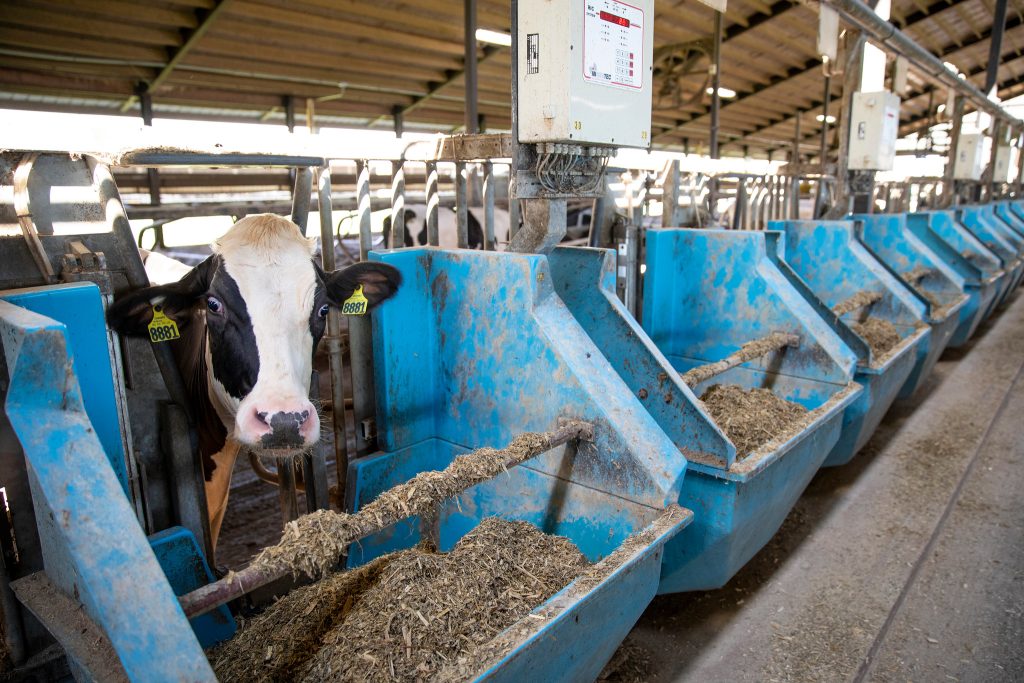
Did you know that cows can produce up to 45 gallons of saliva daily? It’s not just for digestion — saliva plays an important role in buffering acids in the rumen, ensuring the microbes can keep breaking down the feed efficiently. This natural system helps keep cows healthy and supports steady milk production.
What are your hobbies and other interests?
I enjoy playing pickleball. I also love reading and learning about new things; the sense of discovery makes life much more interesting to me. Whether it’s exploring a new topic or picking up a new skill, I’m always curious and motivated to keep growing.