
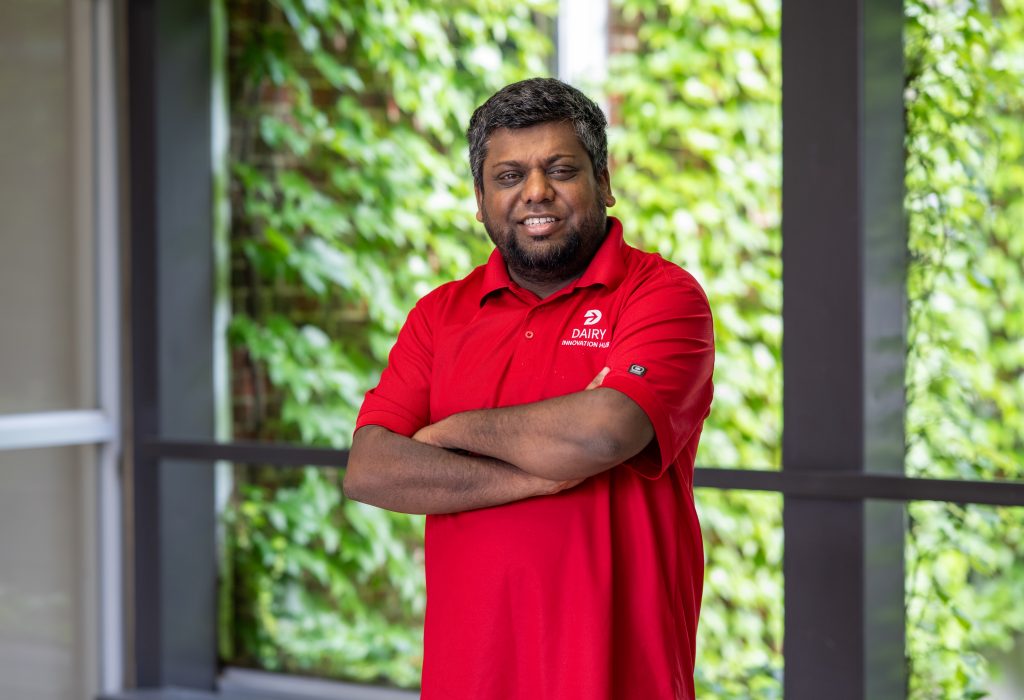
Assistant Professor | Agriculture Economics | UW–River Falls | start date August 2024
What is your hometown? I grew up in Chittagong, a major metropolitan area in southeastern Bangladesh. Some of my most formative experiences came from visiting my grandparents’ home in the village, where I experienced farming life firsthand. That early exposure to agriculture, seeing how food is grown and understanding the challenges farmers face, left a lasting impression on me.
What is your educational/professional background, including your previous position?
I completed my PhD in Food and Resource Economics at the University of Florida, where I specialized in agribusiness marketing, sustainability, and consumer behavior. Before my PhD, I was an assistant professor at the Institute of Health Economics at the University of Dhaka. Prior to that, I worked at BRAC’s Research and Evaluation Division in Bangladesh as a research associate.
How did you get into your field of research?
During my undergraduate and master’s studies, I realized that economics is a powerful tool for understanding society and its challenges and identifying meaningful solutions. That curiosity led me toward research. I found myself drawn to real-world questions, especially those that lie at the intersection of food systems, sustainability, and market behavior.
What are the main goals of your research program?
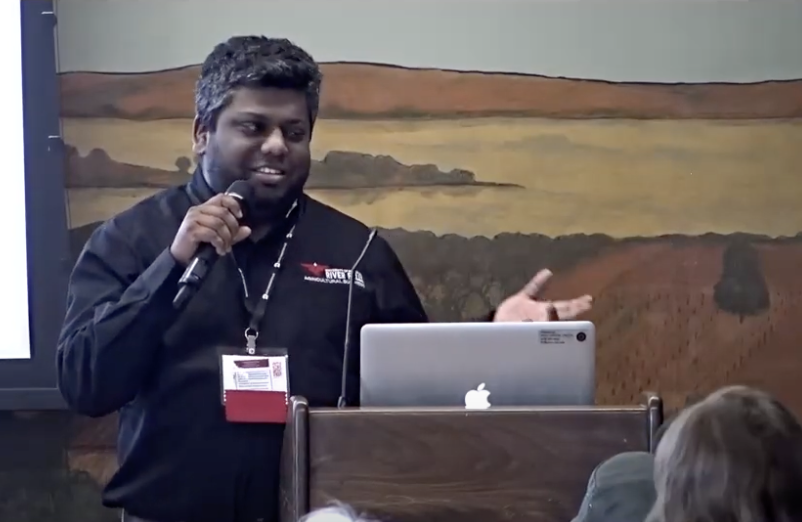
My research program focuses on the financial sustainability of Wisconsin’s dairy farms. I’m currently studying the patterns and risk factors behind dairy farm exit using machine learning models. This work can directly support Wisconsin’s farm succession and extension programs by identifying farms at risk and enabling proactive support. In addition, I’m exploring the feasibility of establishing a choice and sensory lab at UW–River Falls to promote collaboration across teaching, research, and the dairy industry. I believe such a lab can drive dairy product innovation, deepen our understanding of consumer preferences, and enhance experiential learning opportunities for students. Recently, I also received a Dairy Export Promotion Grant from the Wisconsin Department of Agriculture, Trade and Consumer Protection (DATCP) to study international market opportunities for Wisconsin dairy products.
What attracted you to UW–River Falls and the Dairy Innovation Hub?
During my PhD, I built a strong foundation in agribusiness marketing, and I was eager to apply that skill set in a real-world context. The Dairy Innovation Hub—and Wisconsin’s vibrant $52.8 billion dairy industry—offered the perfect opportunity. UW–River Falls stood out for its commitment to student-centered learning and applied research. It felt like a place where I could grow as a researcher and educator while bringing meaningful support for the industry.
What was your first visit to campus like?
I am a college-town type of person, so River Falls immediately felt like home. I still remember my breakfast meeting with Brenda Boetel and Sierra Howry on my first day—it was such a warm and welcoming start that I left feeling confident this was the right place.
What’s one thing you hope students who take a class with you will come away with?
I hope my students leave class with a deeper appreciation for real-world problem-solving and data-driven decision-making in the food and agricultural sectors. If they also leave my class feeling curious, empowered, and just a little more interested in agricultural economics, that’s a win.
Do you feel your work relates in any way to the Wisconsin Idea?
Absolutely. The Wisconsin Idea is about ensuring that education and research extend beyond the classroom to benefit the broader public. My work is grounded in that principle, whether it’s identifying farms at risk, improving marketing strategies, or opening new export pathways, the goal is to generate insights that directly serve the state’s dairy industry and communities.
What are your hobbies and other interests?
I enjoy learning new skills. Right now, I’m getting into woodworking and planning to build a dresser for my daughter. It delights me that I am creating something meaningful.